Evelyn Pringle reports on chemical child abuse being pushed by psychiatry in juvenile detention centers.
LINK
Archive of Evelyn Pringle's articles
Showing posts with label Child psychiatry. Show all posts
Showing posts with label Child psychiatry. Show all posts
Sunday, November 14, 2010
Tuesday, July 20, 2010
Video: Generation RX
The deliberate chemical lobotomizing of an entire
generation for profits & societal degeneration
Generation RX
EX G.I. Joe † Ghetto Church † | MySpace Video
generation for profits & societal degeneration
Generation RX
EX G.I. Joe † Ghetto Church † | MySpace Video


Monday, June 21, 2010
Medicating Children: A “Whistleblower’s” Lawsuit Raises a Novel Legal Question
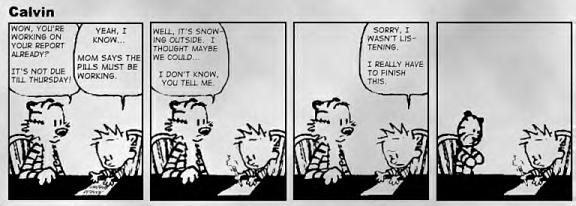
From Robert Whitaker's Blog, MAD IN AMERICA, at Psychology Today
"In the past few years, a number of pharmaceutical companies have admitted to federal charges that they illegally
marketed psychiatric medications for non-approved uses, with the companies paying large sums to settle the cases.
Now, a legal complaint filed by the Law Project for Psychiatric Rightsin an Alaskan federal court is raising a
related question. When healthcare providers bill Medicaid for prescriptions of psychiatric drugs to children for non-
approved uses, are they committing Medicaid fraud?
The case, United States ex-rel Law Project for Psychiatric Rights v. Matsutani, was unsealed earlier this year, and
legal papers were recently filed that have brought this novel question -- which obviously has profound implications
for the prescribing of psychiatric medications to poor children and adolescents -- into sharp focus.
The Law Project for Psychiatric Rights (PsychRights) , which is headed by Alaskan attorney James Gottstein, filed its
whistleblower complaint in April 2009. Known as a qui tam lawsuit, PsychRights sued on behalf of the federal
government under the False Claims Act, which allows private individuals to pursue legal complaints against
individuals or companies that are allegedly defrauding the government. In December, the federal government
declined to join PsychRights in the case.
PsychRights named Alaskan state officials, hospitals, mental health agencies, psychiatrists, and pharmacies as
defendants. In its complaint, PsychRights argues that the federal government has agreed to provide Medicaid
reimbursement only for those outpatient drugs that are prescribed for an FDA-approved use or for a use supported
by a medical compendium (such as the DRUGDEX Information System.) PsychRights maintains that the defendants
defrauded the federal government when they billed Medicaid (or the federal Children's Health Insurance Program)
for outpatient drugs that didn't meet this standard.
As part of its complaint, PsychRights identified 16 commonly prescribed psychiatric medications that have no
"medically accepted indication" for youth under 18 years old, and it also identified the limited number of "medically
accepted indications" that exist for 32 other psychiatric drugs. PsychRights compiled this list of "approved" uses by
methodically going through the drug compendiums, and it serves as the evidential heart of the complaint, for it
reveals that psychiatric medications are regularly prescribed to poor children for non-approved uses. PsychRights is asking the federal court to stop this practice (which it argues is harmful), and to pay hefty financial penalties for the fraudulent claims made to date."
Riveting! Thank you, Robert Whitaker.
Read the rest at
http://www.psychologytoday.com/blog/mad-in-america/
Some of our previous posts on Robert Whitaker's views and anti-psych meds articles -
http://www.thestreetspirit.org.
This site is owned by The American Friends Service Committee (AFSC),
a Quaker organization that includes people of various faiths who are committed to social justice and peace.
http://www.thestreetspirit.org/August2005/mad.htm
http://www.thestreetspirit.org/August2005/madinterview.htm
http://www.thestreetspirit.org/August2005/leonards.htm
http://www.thestreetspirit.org/August2005/zyprexa.htm
http://web.archive.org/web/20071119112008/http://www.namiscc.org/newsletters/February02/JohnNashDrugFreeRecovery.htm
http://pharmaceuticalsanonymous.blogspot.com/2009/12/us-kids-represent-psychiatric-goldmine.html
http://pharmaceuticalsanonymous.blogspot.com/2008/05/royal-recovery-from-schizophrenia.html
Friday, December 11, 2009
NYT: Poor Children More Likely to Be Given Antipsychotics
"Do too many children from poor families receive powerful psychiatric drugs not because they actually need them — but because it is deemed the most efficient and cost-effective way to control problems that may be handled much differently for middle-class children?"
Link: http://www.nytimes.com/2009/12/12/health/12medicaid.html?_r=1&hp
Saturday, November 28, 2009
British Government Tries to Censor Bonkers Institute
A Fawlty Towers of embarassment!
The Bonkers Institute
For OpEdNews: Martha Rosenberg - WriterLINK
"Your medicine is called Olanzapine. Pronounced 'o-lan-za-peen,'" says the lime green kids' brochure for the antipsychotic Zyprexa, published by Britain's National Health Service (NHS). "Many children, teenagers and young people need to take medicines prescribed by doctors to help them stay well and healthy," says the text amid cartoons of happy children skating, roller blading and playing soccer.
Similar brochures educate children about "ris-perry-done" (Risperdal), another antipsychotic and "ato-mox-e-teen" (Strattera), an ADHD drug. But when mental health advocate Ben Hansen tried to "educate" US children further by posting the brochures on his web site bonkersinstitute.org, he got a love letter from the NHS.
"I have been informed that you are using our leaflets on your web-site," wrote Deputy Chief Pharmacist with the Central and North West London NHS Trust Sue Eccles in an email this month. "Our objective is [sic] provide written materials to support the verbal counselling given by healthcare professionals -- they are not meant to stand alone as sources of information," says Eccles requesting that only the "front page and our contact details," be shown.
The Bonkers Institute
Sunday, October 4, 2009
Misdiagnosed Youngsters? - John Sorboro, MD
Psychiatric News September 6, 2002
Volume 37 Number 17
© 2002 American Psychiatric Association
p. 32
Letter to the Editor
Misdiagnosed Youngsters?
John Sorboro, M.D.
Youngstown, Ohio
"It was with great interest that I read in your June 21 issue a review of the study by Dr. Barbara Geller, "Two-Year Prospective Follow-Up of Children With a Prepubertal and Early Adolescent Bipolar Disorder Phenotype." This study should be a wake-up call to the legions of psychiatrists who continue to pollute our youth with medications that have no real benefit or solid research to support there use.
I found it most puzzling that the author, while speculating why none of the "treatment" worked but a two-parent home was of benefit, did not consider the most obvious answer: that most of the children in her study (as well as in the United States) whom we call "bipolar" are not. Have we all forgotten what Kraepelin taught us, and how this illness is defined? The psychiatric community needs to recognize the limits of descriptive diagnosis with regard to both treatment and research. Most of us recognize there is a spectrum to this illness, but we must end this practice of labeling all children with mood lability and chaotic behavior—as well as adults with personality disorders—as bipolar.
I have cared for hundreds of adolescents in a residential setting who were diagnosed as bipolar, and many had reported psychotic symptoms. None of them was helped by medications that we acknowledge help adults with manic-depressive illness. Many of the youngsters improved with time because of structured environment and growth. Neuropsychiatric illnesses such as obsessive-compulsive disorder, major depression, and schizophrenia can present in young people, but let’s stop pretending that all behaviorally disordered children have an illness that by definition will never go away.
Have we also forgotten that our first job as physicians is to recognize our limits and to do no harm?"
Link
Volume 37 Number 17
© 2002 American Psychiatric Association
p. 32
Letter to the Editor
Misdiagnosed Youngsters?
John Sorboro, M.D.
Youngstown, Ohio
"It was with great interest that I read in your June 21 issue a review of the study by Dr. Barbara Geller, "Two-Year Prospective Follow-Up of Children With a Prepubertal and Early Adolescent Bipolar Disorder Phenotype." This study should be a wake-up call to the legions of psychiatrists who continue to pollute our youth with medications that have no real benefit or solid research to support there use.
I found it most puzzling that the author, while speculating why none of the "treatment" worked but a two-parent home was of benefit, did not consider the most obvious answer: that most of the children in her study (as well as in the United States) whom we call "bipolar" are not. Have we all forgotten what Kraepelin taught us, and how this illness is defined? The psychiatric community needs to recognize the limits of descriptive diagnosis with regard to both treatment and research. Most of us recognize there is a spectrum to this illness, but we must end this practice of labeling all children with mood lability and chaotic behavior—as well as adults with personality disorders—as bipolar.
I have cared for hundreds of adolescents in a residential setting who were diagnosed as bipolar, and many had reported psychotic symptoms. None of them was helped by medications that we acknowledge help adults with manic-depressive illness. Many of the youngsters improved with time because of structured environment and growth. Neuropsychiatric illnesses such as obsessive-compulsive disorder, major depression, and schizophrenia can present in young people, but let’s stop pretending that all behaviorally disordered children have an illness that by definition will never go away.
Have we also forgotten that our first job as physicians is to recognize our limits and to do no harm?"
Link
Saturday, July 11, 2009
Mad People's History: Professor Geoffrey Reaume
Disability historian explores 'mad' people's history
Not until he was 27 did Geoffrey Reaume come out of the closet. The York critical disabilities and health ethics professor, now 44, disclosed to his thesis supervisor that he had been in a psychiatric hospital during his teens. It added credence to his proposal to do a PhD on life in a Toronto asylum – from the patients’ perspective.
Until Reaume came along, historians had documented life in asylums in Canada based solely on doctors’ points of view. Doctors’ accounts of patients "were grossly stereotypical," says Reaume, who also took offence at fellow historians who dismissed patients’ accounts of their asylum experience as rambling and semi-literate, who ignored their humanity. "It was insulting to call them that when they were just trying to express themselves," says the Faculty of Health professor. "That’s why I felt it was important to tell their stories."
He applied under the Freedom of Information Act for access to patients’ records at the Toronto Hospital for the Insane between 1870 and 1940. As he combed the medical files, he began unearthing the authentic voices of "mad" patients from snatches of conversation doctors and nurses had recorded in their notes, and patients’ letters confiscated by asylum staff. Gradually, he formed a picture of what daily life in an asylum was like from patients’ points of view. It was groundbreaking research and Oxford University Press Canada published his PhD thesis as a book, Remembrance of Patients Past: Patient Life at the Toronto Hospital for the Insane, 1870-1940, in 2000.
- Excerpt from article - York U.

Photo - Professor Geoffrey Reaume
Listen to an interview here
Chapter from one of his books
Psychiatric Survivor Archives of Toronto
The Secret Handshake group (schizophrenia)
Mad Pride Week
Mad Pride Toronto
Sunday, June 28, 2009
Psychiatric Treatment: A Risk Factor for Obesity?
Get the stats and facts from the Canadian Pediatric Association (PDF)
https://www.cps.ca/english/Media/NewsReleases/PCHFebruary02/ArticlePsychiatricObesity.pdf or Link
Apparently increased or decreased head size, weight gain and male breast enlargement are pretty common with all antipsychotic medications, and the results can be permanent. Link
Gynecomastia - Man Boobs -
More Americans are taking drugs for mental illness than ever before, reports Reuters.
Why not try food for mood and mental health instead?
An article from the Townsend Letter for Doctors and Patients outlines vitamin treatment of psychosis (schizophrenia) here.
https://www.cps.ca/english/Media/NewsReleases/PCHFebruary02/ArticlePsychiatricObesity.pdf or Link
Apparently increased or decreased head size, weight gain and male breast enlargement are pretty common with all antipsychotic medications, and the results can be permanent. Link
Gynecomastia - Man Boobs -
More Americans are taking drugs for mental illness than ever before, reports Reuters.
Why not try food for mood and mental health instead?
An article from the Townsend Letter for Doctors and Patients outlines vitamin treatment of psychosis (schizophrenia) here.
Subscribe to:
Posts (Atom)


 Posts
Posts