Pharmaceuticals Anonymous

Showing posts with label antipsychotics. Show all posts

Sunday, June 8, 2008

Harvard doc pushes Ritalin, reaps $1.6M

Harvard Psychiatrist Didn’t Report Pharma Income

A Harvard child psychiatrist whose work has helped fuel an explosion in the use of antipsychotics in children earned at least $1.6 million in consulting fees from drugmakers from 2000 to 2007 but for years did not report much of the income to university officials, according to information given Congressional investigators, The New York Times reports.
By failing to report income, the psychiatrist, Joseph Biederman, and a colleague in the psychiatry department at Harvard Medical School, Timothy Wilens, may have violated federal and university research rules governing conflicts of interest, US Senator Chuck Grassley, an Iowa Republican tells the Times, since some of their research is financed by government grants.

Wow!

Follow the money!
Visit Dr. Biederman here

Ironically, pro-force psych profiteer E. Fuller Torrey comments here:
“The price we pay for these kinds of revelations is credibility, and we just can’t afford to lose any more of that in this field,” said Dr. E. Fuller Torrey, executive director of the Stanley Medical Research Institute, which finances psychiatric studies. “In the area of child psychiatry in particular, we know much less than we should, and we desperately need research that is not influenced by industry money.” (NYT)


Brains... they need brains...
Instances of deliberate breach of policy, including failure to file or knowingly filing an incomplete, erroneous, or misleading disclosure form, violations of the guidelines or failure to comply with prescribed monitoring procedures, will be adjudicated in accordance with applicable disciplinary policies and procedures of the Faculty of Medicine and of the affiliated hospitals. Possible sanctions will include the following:
1. Formal admonition;
2. The inclusion in the Faculty Member's file of a letter from the Office of the Dean indicating that the individual's good standing as a member of the Faculty has been called into question;
3. Ineligibility of the Faculty Member for grant applications, Institutional Review Board (IRB) approval, or supervision of graduate students;
4. Non-renewal of appointment;
5. Dismissal from the Faculty of Medicine.

http://www.hms.harvard.edu/integrity/conf.html

Sunday, April 6, 2008

UK: Behaviour medications putting tots at risk

baby green pills


By Sarah Boseley, health editor
The Guardian, Monday April 7 2008

New evidence has shown children's lives are being put at risk by a surge in the use of controversial tranquillising drugs which are being prescribed to control their behaviour, the Guardian has learned.

The anti-psychotic drugs are being given to youngsters under the age of six even though the drugs have no licence for use in children except in certain schizophrenia cases, the report says.

The number of children on the drugs has doubled since the early 1990s as the UK begins to follow a trend started in the US, but critics say they are a "chemical cosh" that could cause premature death.

The first comprehensive analysis, carried out by Ian Wong, professor of paediatric medicines research at the London School of Pharmacy, suggests the number of children on the drugs has surged sharply.

His analysis, to be published next month in the US journal Pediatrics, shows that between 1992 and 2005, 3,000 UK children were given anti-psychotics.


Read the article here

Sunday, March 2, 2008

Myth of the Antipsychotic

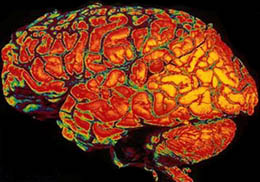
brain Cerveau_Scanner3D

Link

Antipsychotic drugs don't work, are causing a brain damage epidemic and almost triple the risk of dying early, a new book claims. Yet the mental health establishment, as it did with Prozac, is failing to take the evidence seriously.

Historically, whatever dissenters thought has been ignored. So, it appears, have new studies which indicate that antipsychotics do not work long-term. For example, a US study last year in the Journal of Nervous and Mental Disease reported that people diagnosed with schizophrenia and not taking antipsychotics are more likely to recover than those on the drugs. The study was on 145 patients, and researchers reported that, after 15 years, 65% of patients on antipsychotics were psychotic, whereas only 28% of those not on medication were psychotic. A staggering finding, surely? So where were the mainstream media yelps of "breakthrough in schizophrenia treatment". Not a squeak.

Moncrieff's second point is that the psychiatric establishment, underpinned by the pharmaceutical industry, has glossed over studies showing that antipsychotics cause extensive damage - the most startling being permanent brain atrophy (brain damage) or tardive dyskinesia. As in Parkinson's Disease, patients suffer involuntary, repetitive movements, memory loss and behaviour changes. Antipsychotics cause atrophy within a year, Moncrieff says. She accuses her colleagues of risking creating an "epidemic of iatrogenic brain damage".

Moncrieff is a hard-nosed scientist, so she is respectfully reserved. But gross scientific misconduct is her accusation. "It is as if the psychiatric community can not bear to acknowledge its own published findings," she writes.

...

Psychiatrists should be involved in "shared decision-making" with patients, and would have to go to civil courts to argue their case for compulsory treatment. "Psychiatry would be a more modest enterprise," writes Moncrieff, "no longer claiming to be able to alter the underlying course of psychological disturbance, but thereby avoiding some of the damage associated with the untrammelled use of imaginary chemical cures."

The mental health establishment should learn from the Prozac story and pay attention. It's about time.