Pharmaceuticals Anonymous

Showing posts with label orthomolecular treatment. Show all posts

Sunday, October 25, 2009

That Smell

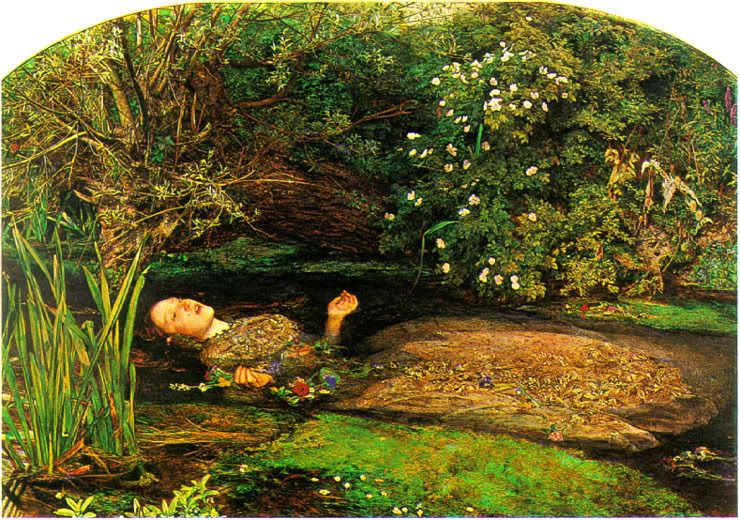
Ophelia Pictures, Images and Photos
Image of Ophelia, from the Tate Gallery.

From the New York Times:
...When clinical depression was diagnosed in my senior year, it was a relief. The phantom had been given form, something I could rail against and, finally, accept. It was Prozac that brokered the truce. With it, I believed I had put my fear behind me.

Then I met Margaret, the woman whose brief presence in my life ultimately would allow me to rescue myself, though I never would have thought so at the time.

It was my first week in graduate school. She stood on the steps of the Yale School of Drama, leaves in her hair, bellowing lines based on a passage from Medea: “What feeble night bird of misfortune is this at my door? Is this that great adventurer — the famous lord of the seas and delight of women, the heir of rich Corinth — this crying drunkard beating down the dark doorstep? Yet you’ve not had enough. You’ve come to drink the last bitter drops. I’ll pour them for you.”

The scene was electric, and I, stricken. What had wrung this rapturous outpouring from this woman, and why did no one else seem to take note of her feral presence?

BRIEFLY I wondered if she was an apparition (there was something surreal about her wide eyes and hawkish face), but then she smiled and caught my gaze and I knew. She was one of them. Here but not here. With us but not. Afflicted by, and in communion with, a force both fierce and unseen — a force that both chastened and exalted her.
If you have vertigo, you avoid bridges. If you fear madness, as I do, you avoid the Faraway Nearby — that which is at once distant and perilously close, a term I had taken from the title of a Georgia O’Keeffe painting.

That day was the first of many on which I simply lowered my gaze and walked around her. Yet not only was Margaret a difficult person to ignore, she was positively viral. Her loud, vibrato voice was mesmerizing; it flung Shakespearean and Greek verse about like nursery rhymes. Her rangy physique and erect carriage added nobility to even the shabbiest ensemble. She gave off a sour-milk odor that lingered long after she’d moved on. To inoculate myself, I developed a kind of hysterical blindness. I simply stopped seeing her....

Link

"It was Prozac that brokered the truce. With it, I believed I had put my fear behind me....
She gave off a sour-milk odor that lingered long after she’d moved on."


The sour-milk odor and response to an antidepressant are big clues, and those who know orthomolecular medicine may quickly suspect Candida, Pyroluria or Histadelia and recommend appropriate nutritional protocols for these individuals.

Surprisingly often, correcting nutrition is all that is needed to prevent the waste of a life.

Helpful PDF - Questionnaire (Blake Graham)

Saturday, August 8, 2009

Did caffeine in cola lead to schizophrenia and murder?


GEORGIA MENTAL HEALTH
Unstable mental patients freed by flawed system
By Alan Judd
The Atlanta Journal-Constitution
Sunday, June 28, 2009
Chris Pak pleaded with doctors and nurses at the state psychiatric hospital. His sister, Na Yong Pak, was still psychotic, he said. If they let her go home, he was afraid she would kill herself or someone else – their mother, most likely, the frequent target of her schizophrenia-fueled rage.

Two weeks earlier, Georgia officials had pledged to use caution in discharging patients from its psychiatric facilities. Federal investigators had sharply criticized the state for releasing patients to homeless shelters and bus stops, street corners and abandoned buildings, with little hope for continuing treatment or, in some cases, survival.

Now, on a Friday evening in January at Georgia Regional Hospital/Atlanta, Na Yong angrily refused to sign her discharge papers. She cursed the nurse and swore she would not take her antipsychotic medication.

The doctor and nurse sent Na Yong home, anyway.

“That,” her brother would say later, “is when I knew hell was going to break loose again.”

Twelve days later, after she left Georgia Regional, authorities say, Na Yong doused her mother with gasoline, struck a match, and watched her burn. Myong Hui Pak, 58, died 10 hours later.

Na Yong, 32, is in the Gwinnett County Jail, charged with murder. Her case illustrates the deficiencies that plague Georgia’s mental health system and challenges the state faces in making corrections mandated after a federal civil-rights investigation of hospital conditions.
-snip-
"Her depression gradually turned darker. She yelled at people no one else could see. She would drink only Coca-Cola, but often threw nearly full cans on the floor and against the walls. She accused her mother of poisoning her food."
Link


Since 1953, we have known that adrenochrome malfunction - sometimes related to caffeine - can trigger schizophrenia. See research by Abram Hoffer here and here, as well as an in-depth investigation of caffeine and mental health in our previous post here.
Many young people have a break with reality under the stresses of establishing themselves as adults - while consuming empty calories or toxic foods. But with proper nutrition, vulnerable people's stories do not have to end in tragedy. Link

We would like to see an investigation into caffeine/cola as factors in this murder, though we wonder if the city that is the center of cola manufacturing would permit it.

Tuesday, January 27, 2009

Margot Kidder Battles Stigma


Natural Health article
Margot Kidder's
SEARCH FOR SANITY*

by Karen Dale Dustman

Margot Kidder made headlines as Lois Lane in the 1979 movie "Superman." In 1996, she hit the news again -- when she was discovered ragged and hungry in the backyard of a stranger's Glendale, Calif., home.

Convinced her former husband, writer Thomas McGuane, and the CIA were out to kill her, Kidder roamed the streets of Los Angeles for 1-1/2 weeks, eventually sharing food and a cardboard shack with a homeless man named Charlie. By the end of her delusional episode, the actress was almost unrecognizable. She had lost the caps on her front teeth, chopped off her long auburn hair, and swapped her Armani suit for a homeless man's dirty T-shirt and pants.

Kidder has bipolar disorder, a condition marked by alternating episodes of depression and mania. (The manic phase can produce psychotic symptoms as it did for Kidder.) Born in 1948 in Yellowknife, a mining town in Canada's Northwest Territory, she spent almost 20 years of her adult life seeking treatment. After her 1996 incident, Kidder realized the conventional therapies she was receiving weren't working.
Link

That article was written years ago.... Kidder has been well with orthomolecular medicine for FOURTEEN YEARS. Here is an article about Kidder from 2008.

The actor downplays the time in 1996 when she went missing for three days in Los Angeles and was taken to a psychiatric ward when found dishevelled, dazed and fearful in a stranger's backyard.
"If I were a cancer patient, I would today be considered cured," said Kidder, once diagnosed with bipolar disorder. "I haven't had an episode in 14 years."
Food allergies, the environment, air and water pollution, toxins, a vitamin deficiency, drugs, lack of sleep, low blood sugar and gastrointestinal damage can cause emotional problems, she said.
"The list goes on. Such things can cause mood swings, delusions and even people hearing voices.
"The reality is that you can have 10 people with manic depression and they can have 10 causes that cause their symptoms.
"Pharmaceutical companies make millions of dollars, but are only interested in producing drugs that dampen symptoms."

Link

Saturday, April 26, 2008

Pauling, 1968: Small substances may control sanity

Science 19 April 1968:
Vol. 160. no. 3825, pp. 265 - 271
DOI: 10.1126/science.160.3825.265

Orthomolecular Psychiatry
VARYING THE CONCENTRATIONS OF SUBSTANCES NORMALLY PRESENT IN THE HUMAN BODY MAY CONTROL MENTAL DISEASE
Linus Pauling
1 The University of California, San Diego, P.O. Box 109, La Jolla, California 92037

The functioning of the brain is affected by the molecular concentrations of many substances that are normally present in the brain. The optimum concentrations of these substances for a person may differ greatly from the concentrations provided by his normal diet and genetic machinery. Biochemical and genetic arguments support the idea that orthomolecular therapy, the provision for the individual person of the optimum concentrations of important normal constituents of the brain, may be the preferred treatment for many mentally ill patients. Mental symptoms of avitaminosis sometimes are observed long before any physical symptoms appear. It is likely that the brain is more sensitive to changes in concentration of vital substances than are other organs and tissues. Moreover, there is the possibility that for some persons the cerebrospinal concentration of a vital substance may be grossly low at the same time that the concentration in the blood and lymph is essentially normal. A physiological abnormality such as decreased permeability of the blood-brain barrier for the vital substance or increased rate of metabolism of the substance in the brain may lead to a cerebral deficiency and to a mental disease. Diseases of this sort may be called localized cerebral deficiency diseases. It is suggested that the genes responsible for abnormalities (deficiencies) in the concentration of vital substances in the brain may be responsible for increased penetrance of the postulated gene for schizophrenia, and that the so-called gene for schizophrenia may itself be a gene that leads to a localized cerebral deficiency in one or more vital substances.


When will we act on this information?

Wednesday, April 9, 2008

Journal of Orthomolecular Medicine now available online

Photobucket

FOR IMMEDIATE RELEASE
Orthomolecular Medicine News Service, February 29, 2008

JOURNAL OF ORTHOMOLECULAR MEDICINE NOW ONLINE

(OMNS February 29, 2008) The archives of the Journal of Orthomolecular Medicine are now posted online. Past issues from 1967 through 2002 are available for downloading, at no charge, at http://orthomolecular.org/library/jom/index.shtml

"36 years of important material is now freely available to everyone," said Steven J. Carter, Executive Director of the Toronto-based International Schizophrenia Foundation, which publishes the Journal.

The Journal of Orthomolecular Medicine has led the way in presenting, in advance of other medical journals, new health concerns and treatments including niacin therapy for schizophrenia and coronary disease; vitamin C for cancer; and the nutritional treatment of behavioral disorders, and drug and alcohol abuse. The JOM was also the first medical journal to publish papers on the nutritional treatment of allergies, autism, and AIDS. JOM published pioneering research on candiasis in 1978, mercury amalgam toxicity in 1982, and chronic fatigue syndrome in 1988. The Journal has published over 100 papers on nutritional medicine and cancer, and over 400 articles on schizophrenia and other psychiatric illnesses. JOM is peer-reviewed.

The Journal was founded in 1967 as the Journal of Schizophrenia, and subsequently titled the Journal of Orthomolecular Psychiatry until 1986. Nobel Laureate Linus Pauling authored 9 papers in the Journal from 1970-1992. It was Pauling that gave nutritional medicine the name "orthomolecular." Says JOM Editor-in Chief Abram Hoffer, MD, PhD: "In 1968, Dr. Pauling proposed the term orthomolecular (1,2) which we recognized as the correct word to define the total interest in nutrition, clinical ecology, and the use of vitamin and mineral supplements. All the pioneers in orthomolecular medicine have reported their findings in this journal. It thus represents a unique source for these earlier and current studies which provide a basis for the increasing growth of nutritional medicine."

ONLINE, BUT NOT ON MEDLINE
Curiously, after over 40 years of continuous publication, JOM is still not indexed on MEDLINE. There are about 5,000 other journals indexed by the taxpayer-funded U.S. National Library of Medicine, and over 700 million MEDLINE searches each year. Not one of those searches found a single paper from the Journal of Orthomolecular Medicine. (3)

In 2006, Psychology Today wrote: "The National Library of Medicine refuses to index the Journal of Orthomolecular Medicine, though it is peer-reviewed and seems to meet their criteria." (4)

MEDLINE does, however, index material from Newsweek, Consumer Reports, Reader’s Digest and Time magazines.

Those who may feel think this is irregular may wish to contact the National Library of Medicine’s Deputy Director, Betsy L. Humphreys, at the National Institutes of Health, Bldg. 38, Room 2E17A, 8600 Rockville Pike, Bethesda, MD 20894 or email betsy_humphreys@nlm.nih.gov or humphreb@mail.nlm.nih.gov

The Journal of Orthomolecular Medicine archives, numbering over 600 papers, are posted and topic-searchable at http://orthomolecular.org/library/jom/index.shtml

References:

(1) http://www.orthomed.org/pauling2.html ; http://profiles.nlm.nih.gov/MM/B/B/J/Q/_/mmbbjq.pdf ; http://profiles.nlm.nih.gov/MM/B/B/J/Q/
(2) http://www.orthomed.org/pauling.html
(3) http://www.doctoryourself.com/medlineup.html
(4) Psychology Today, Nov-Dec 2006. http://psychologytoday.com/articles/pto-20061101-000002.html
http://psychologytoday.com/articles/index.php?term=20061101-000002&page=4

Nutritional Medicine is Orthomolecular Medicine

Orthomolecular medicine uses safe, effective nutritional therapy to fight illness. For more information: http://www.orthomolecular.org

The peer-reviewed Orthomolecular Medicine News Service is a non-profit and non-commercial informational resource.

Editorial Review Board:

Carolyn Dean, M.D., N.D.
Damien Downing, M.D.
Harold D. Foster, Ph.D.
Steve Hickey, Ph.D.
Abram Hoffer, M.D., Ph.D.
Bo H. Jonsson, MD, PhD
Thomas Levy, M.D., J.D.
Erik Paterson, M.D.

Andrew W. Saul, Ph.D., Editor and contact person. Email: omns@orthomolecular.org


To Subscribe at no charge: http://www.orthomolecular.org/subscribe.html

JOM is here

Tuesday, March 25, 2008

NAMI speaker displays a brain at TED


It's hard to say what is most disturbing in this TED presentation by Jill Bolte Taylor: the disrespectful and manipulative way this NAMI speaker handles and displays a human brain as a prop; the patronizing and stigmatizing use of her brother in her presentation; her ignorance of the 29 physiological reasons why a patient may present as schizophrenic; or her claim that the hemispheres of the brain are completely separate from each other - only briefly mentioning the Corpus Callossum and ignoring the Medulla, Pons, Midbrain, Thalamus and Hypothalamus.
Visit the Harvard Brain Project here.
NAMI associates have been implicated in more than one case of brain theft.
We hope that Dr. Bolte will stop singing long enough to read about the 29 causes of schizophrenia here and here, and we wish appropriate diagnosis, good medical treatment and speedy recovery to her brother.